

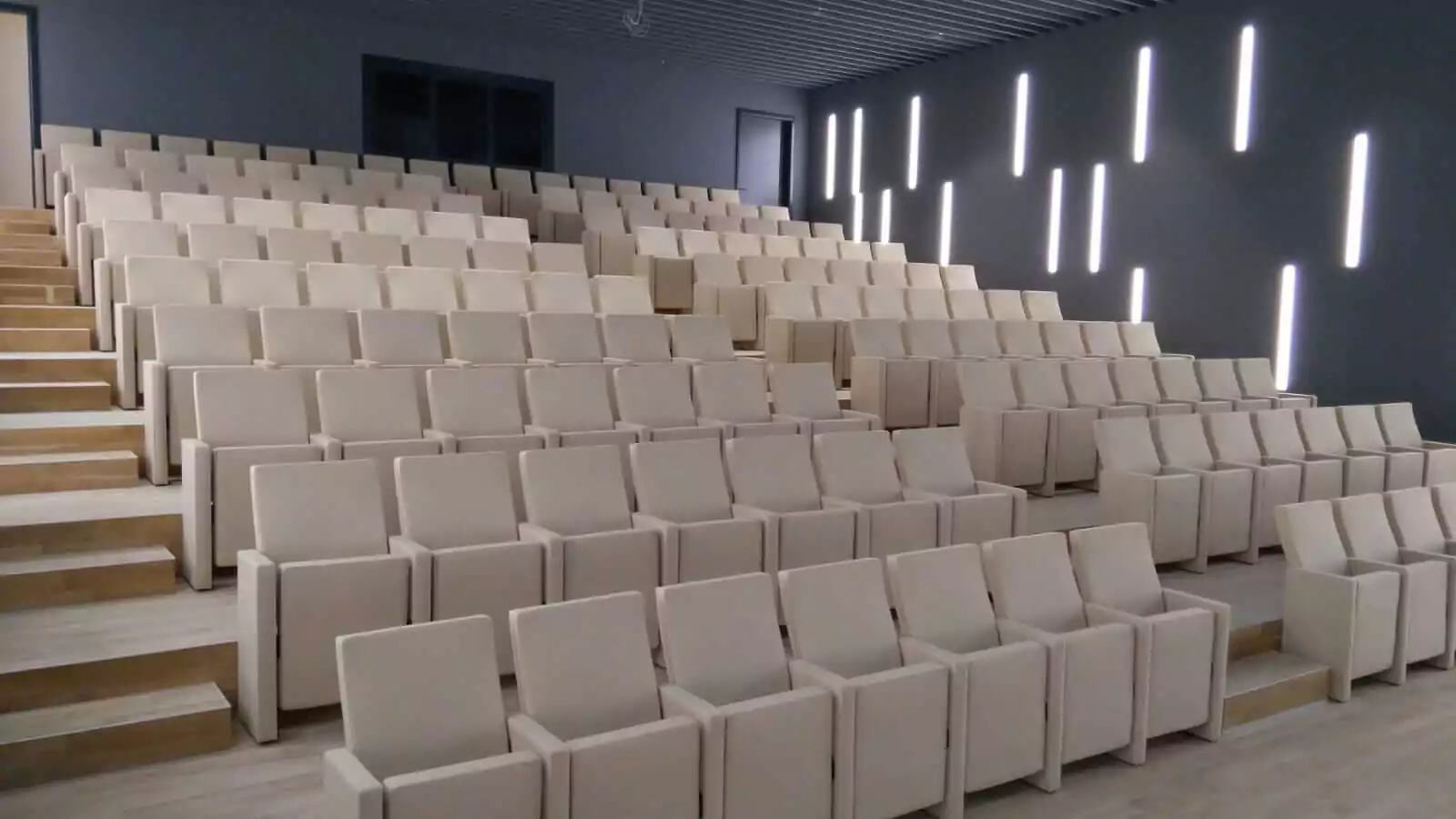
Seating Design for Live Performance Spaces
Live performance spaces demand a level of precision that few other environments require. In theatres, every detail influences how the audience connects with the stage. Seating is one of the most critical elements in this relationship, as it directly affects posture, concentration, acoustics, and the overall rhythm of the space.
Unlike venues designed for passive viewing, theatres rely on sustained attention, subtle sound dynamics, and uninterrupted visual focus. Seating must support these conditions quietly and consistently throughout each performance.
Theatre Seating as a Spatial Discipline
Theatre seating is not placed arbitrarily. It follows a strict spatial logic that balances visibility, movement, and audience density. The position, height, and angle of each seat contribute to how the performance is perceived from every point in the hall.
Effective theatre seating design supports
Clear sightlines toward the stage
Controlled audience movement within rows
Visual order that reinforces spatial clarity
When seating follows a disciplined layout, the entire venue gains coherence and balance.
Supporting Audience Focus Over Time
Live performances often extend over long durations and require continuous mental engagement. Seating must allow the body to remain still and supported so that attention is not interrupted by discomfort.
This is achieved through careful consideration of
Upright yet relaxed seating posture
Balanced back support that prevents fatigue
Seat geometry that limits unnecessary movement
The goal is not luxury but sustained attentiveness.
Acoustic Sensitivity of Theatre Seating
In performance spaces, sound behaves differently than in cinemas. Voices, instruments, and ambient sounds interact directly with the audience. Seating materials and structure influence how sound is absorbed and reflected throughout the hall.
Well planned theatre seating helps
Maintain acoustic consistency across occupied and unoccupied seats
Reduce unwanted noise caused by movement
Support natural sound projection from the stage
This acoustic contribution is subtle but essential to performance quality.
Durability Under Repeated Use
Theatres operate across seasons, festivals, and diverse programs. Seating systems must endure repeated use without losing stability or visual order.
Durable theatre seating solutions rely on
Strong internal construction
Materials that maintain shape and alignment
Quiet operation during audience movement
Reliability ensures that technical performance does not interfere with artistic expression.
Architectural Integration in Performance Venues
Many theatres are architecturally significant spaces, whether historic or contemporary. Seating must respect this context rather than dominate it.
Architectural integration involves
Proportions aligned with the scale of the hall
Design language that complements the interior
Visual restraint that keeps focus on the stage
Seating becomes part of the architecture rather than an added layer.
Flexibility Without Visual Disruption
Modern theatres often host varied programming, including drama, music, lectures, and hybrid performances. Seating must support these shifts without compromising spatial integrity.
Thoughtful seating design allows
Consistent comfort across different event formats
Efficient audience flow regardless of program type
Visual continuity throughout changing uses
Flexibility is achieved through planning, not through visual complexity.
Seating as an Invisible Support System
The most successful theatre seating solutions are rarely noticed by the audience. Their effectiveness lies in how seamlessly they support the experience.
When seating performs correctly, it
Allows performers to command full attention
Keeps the audience physically balanced and still
Preserves the emotional flow of the performance
This quiet reliability is the hallmark of professional theatre seating.
Conclusion
Theatre seating is a foundational component of live performance environments. It shapes how space is used, how sound travels, and how audiences remain engaged from the opening moment to the final curtain.
When seating is designed with discipline, sensitivity, and long term performance in mind, it becomes an invisible ally to the stage, enabling performances to unfold without distraction and with full impact.
Created By : Monseat